
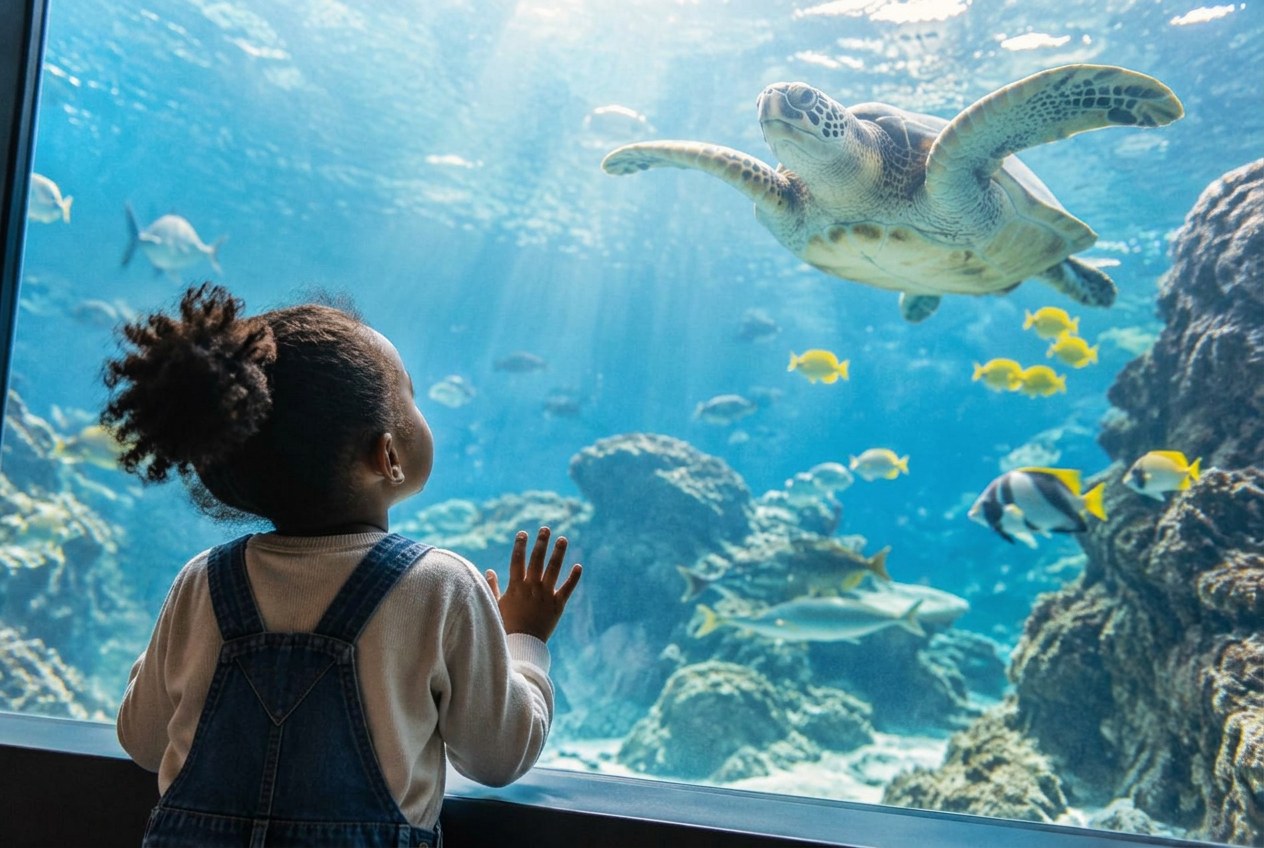
A visit to a zoo, aquarium or nature park can spark something extraordinary.
It might be a child’s first encounter with a giraffe, a family discovering the hidden world beneath the ocean’s surface, or a visitor noticing wildlife in a woodland they have walked through countless times before.
These moments of curiosity are powerful. They create connections, inspire questions and open the door to learning.
But in a world facing increasingly urgent environmental challenges, is raising awareness enough?
At Living Learning, we believe the greatest opportunity for conservation education lies in what happens next.
A defining moment for biodiversity
Today, 19 October 2026, the United Nations Biodiversity Conference (COP17) begins in Yerevan, Armenia.
The conference brings together governments, conservation organisations and environmental experts to review progress towards international biodiversity commitments, including the ambition to protect 30% of the world’s land and sea by 2030.
Recent assessments suggest that progress remains insufficient, with significant challenges around habitat protection, funding and implementation.
While these discussions take place on a global stage, their relevance extends far beyond government policy.
They raise an important question for organisations working directly with wildlife and the public:
How can we help people understand not only why biodiversity matters, but also their own connection to its future?
For zoos, aquariums and nature attractions, education is a vital part of that conversation.
Moving beyond facts and figures
Conservation education has always played an important role in helping visitors understand wildlife, habitats and environmental threats.
Interpretation panels, keeper talks, school workshops and guided experiences all contribute to this understanding.
Yet the most effective educational experiences do more than communicate information.
They encourage curiosity, build emotional connections and give visitors opportunities to explore ideas for themselves.
Consider an aquarium display about marine pollution.
Sharing information about the threats facing sea turtles is valuable. But an experience that also helps visitors understand the relationship between their everyday choices and marine ecosystems has the potential to create a more personal connection.
Or imagine a woodland activity that moves beyond identifying native species and encourages visitors to investigate habitats, make observations and discover how they might support wildlife closer to home.
These approaches do not necessarily require significant investment.
Often, they begin with thoughtful educational design and a clear understanding of what an experience is intended to achieve.
Nature connection: making learning meaningful
One of the encouraging developments in environmental education is the growing emphasis on connecting people directly with nature.
Programmes such as the National Education Nature Park demonstrate how young people can become active participants in biodiversity learning, investigating habitats, gathering information and contributing to practical improvements in their surroundings.
For visitor attractions, this reinforces the value of learning through experience.
A well-designed educational activity can invite visitors to observe, question, explore and reflect.
It can also recognise that different audiences engage in different ways.
A young child may connect through storytelling and sensory discovery. A school group may benefit from investigation and fieldwork. Adult visitors may be interested in conservation projects, environmental challenges or opportunities to take action locally.
The aim is not to deliver the same information to everyone.
It is to create meaningful opportunities for different people to develop their own understanding and connection.
Education is everyone’s opportunity
When we think about education within a zoo or aquarium, it is easy to picture a classroom, a dedicated education team or a scheduled school visit.
But learning happens across the entire visitor experience.
It happens during conversations with staff, through exhibition design, along nature trails and at those unexpected moments when something captures a visitor’s imagination.
This presents an opportunity for attraction leaders to consider education as part of their wider organisational strategy.
How well do interpretation, conservation messaging and visitor engagement work together?
Are learning opportunities accessible to different audiences?
Do staff feel confident communicating the organisation’s conservation work?
And are visitors leaving with a clearer understanding of why that work matters?
A joined-up approach can help ensure that education feels like a natural part of the experience rather than something separate from it.
Making an impact, even with limited resources
Of course, ambition must be balanced with reality.
Across the visitor attraction sector, teams are navigating competing priorities, financial pressures and limited resources.
These challenges are reflected in the theme of BIAZA’s upcoming Conservation Education Conference in December 2026: Positivity, Purpose and Perseverance: Innovating Education in a Challenging Industry.
It is a timely reminder that meaningful education does not always depend on major new exhibits, expensive technology or large-scale programme development.
Sometimes, relatively small changes can make a significant difference.
Refreshing the questions used during a keeper talk, making interpretation more accessible, strengthening links between school sessions and conservation projects, or introducing simple ways to gather visitor feedback can all contribute to a more purposeful educational offer.
The starting point is understanding what already works, where opportunities exist and how education can best support the attraction’s wider objectives.
Understanding what success looks like
As conservation education continues to evolve, it is also worth considering how we define success.
Visitor numbers, workshop attendance and school bookings remain important measures. But they only tell part of the story.
What have visitors discovered?
Have their perspectives changed?
Do they feel more connected to the natural world?
Have they developed a better understanding of conservation, or identified something meaningful they can do?
Not every outcome is easy to measure, and not every visitor experience needs a formal evaluation.
However, having clear educational objectives and practical ways to reflect on their effectiveness can help organisations continually improve.
It can also help education teams demonstrate the value of their work to colleagues, leadership teams and wider stakeholders.
Looking ahead
As COP17 brings biodiversity into the international spotlight, it offers a valuable opportunity to reflect on the role of education in connecting people with conservation.
Zoos, aquariums and nature attractions occupy a unique position.
They can bring complex environmental issues to life through real places, living collections, specialist knowledge and memorable experiences.
The challenge, and the opportunity, is ensuring that these encounters offer more than a moment of interest.
Because meaningful conservation education is not simply about what visitors learn during their time with us.
It is about the curiosity, understanding and connection they take away.
How Living Learning can help
At Living Learning, we work with zoos, aquariums, wildlife parks, nature attractions and other visitor destinations across the UK to develop engaging, purposeful educational experiences.
Whether you are reviewing an existing education programme, refreshing interpretation, strengthening your visitor engagement or exploring new learning opportunities, we provide practical, collaborative support shaped around your organisation.
Looking to make more of your attraction’s educational potential?
We would love to hear about your ideas and explore how Living Learning can help bring them to life.